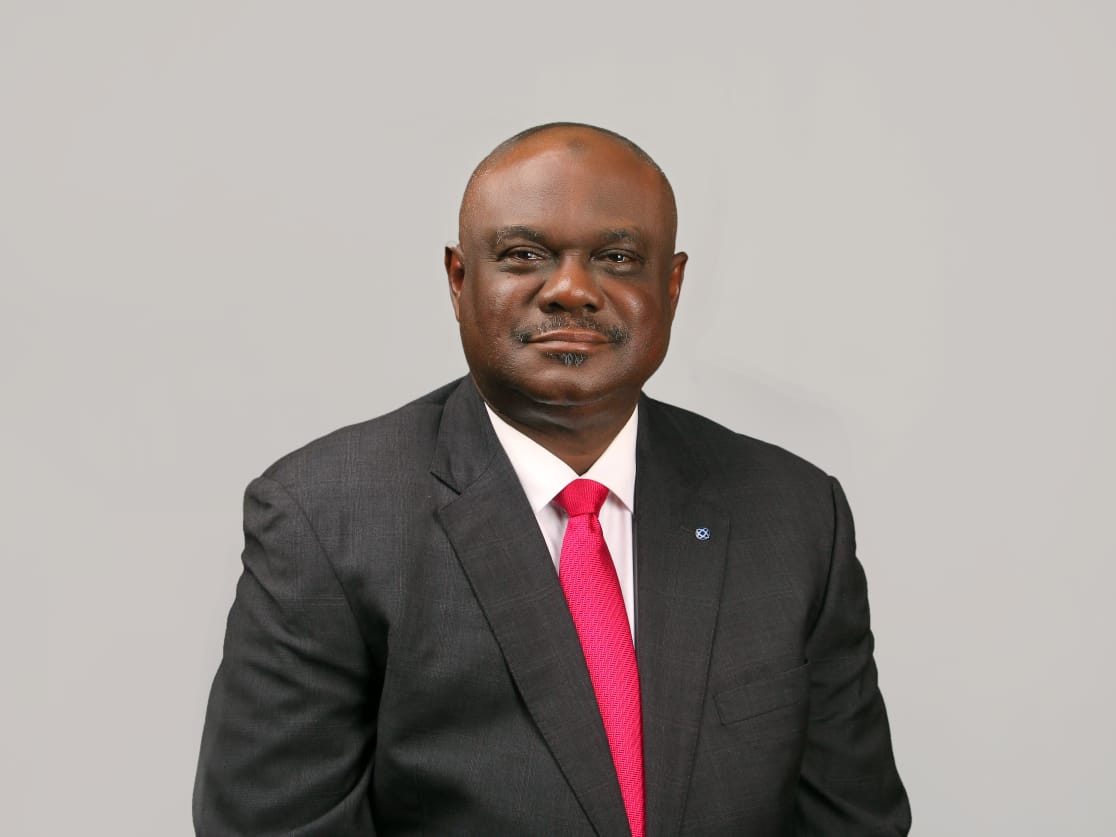
President of the African Bar Association (AfBA), High Chief Ibrahim Eddy Mark, has called on African governments and institutions to strengthen the rule of law, deepen democratic governance and confront insecurity, economic fragmentation and irregular migration as part of a broader effort to build a more resilient continent.
Mark made the call in his address at the opening ceremony of the 2026 African Bar Association Annual Conference in Sal, Cabo Verde, where he challenged African leaders and legal professionals to move beyond rhetoric and take practical steps towards building stronger institutions and improving the lives of Africans.
The AfBA President said this year’s conference theme, “Resilient Africa’s Roadmap for Sustainable Development: Addressing and Strengthening Issues of Military, Security and Economic Stability,” was both timely and urgent.
He painted a contrasting picture of a continent endowed with enormous resources and human potential but still confronted by widespread poverty, unemployment, insecurity, weak institutions and recurring unconstitutional changes of government.
According to him, Africa possesses enormous natural resources, a youthful population, remarkable entrepreneurial energy and immense economic potential, yet continues to face uncontrolled conflicts, terrorism, insecurity, economic instability, democratic reversals, poverty and unemployment.
Against that background, Mark posed a fundamental question to delegates: “What role must the law play in building that Africa?”
‘No Sustainable Development Without Rule of Law’
Mark identified the rule of law and good governance as essential foundations for Africa’s development, arguing that credible democracy cannot exist without constitutionalism.
He said sustainable development could not be achieved without the rule of law, while the rule of law itself could not survive without an independent judiciary and institutions that command public confidence.
The AfBA President also stressed that the continent needs democratic systems capable of delivering justice, accountable institutions, transparent elections, respect for constitutional limits and protection of fundamental freedoms.
He urged African governments to deepen democratic institutions and rebuild public confidence in governance, warning that when institutions are weak, the response should be to strengthen them rather than abandon them.
AfBA Rejects Coups, Unconstitutional Changes of Government
Turning to Africa’s security challenges, Mark said AfBA had received reports of unfolding genocidal actions in Darfur, Cameroon and the Great Lakes region and was concerned about conflicts and instability across parts of the continent.
He said the Association had either issued or was in the process of issuing statements on the conflicts and called on African leaders to address them decisively.
The AfBA President declared the Association’s opposition to unconstitutional changes of government, including military coups, as well as disruptive tendencies capable of undermining democratic institutions.
He also called for stronger cooperation among African countries in intelligence sharing, counter-terrorism, border management, cybersecurity and judicial cooperation.
According to Mark, security operations must remain subject to the rule of law, while national security and human rights should not be treated as competing principles.
He cautioned that the suspension of democratic and constitutional processes cannot become the preferred response to military intervention, adding that the solution to poor governance must be “better governance.”
AfCFTA Must Move From Declarations to Implementation
On the economy, the AfBA President expressed concern that African economies remain excessively fragmented despite the continent’s enormous economic potential.
He described the African Continental Free Trade Area (AfCFTA) as a historic opportunity to create a genuinely integrated African market but said legal and institutional obstacles to practical integration must be addressed.
Mark called for stronger cross-border legal mechanisms, harmonised regulations, improved infrastructure, easier cross-border payments and stronger systems for resolving commercial disputes.
He said African lawyers have an important role in supporting the continent’s integration through cross-border transactions, arbitration, investment law, digital trade, intellectual property and regional economic integration.
“Let us move from treaties to transactions, from declarations to implementation, and from fragmented markets to an integrated African economy,” he said.
Mark Calls for Visa-Free Africa
The AfBA President also made a case for freer movement across the continent, describing it as a contradiction for Africans to speak about African unity while Africans themselves continue to face significant barriers to travelling within the continent.
He called for the removal of unnecessary travel restrictions and renewed commitment to a visa-free Africa.
Mark said such a policy would not mean ignoring security concerns, but rather improving technology, intelligence sharing and border management to facilitate movement while protecting the continent’s people.
“Our borders should protect our people, not prevent our people from knowing one another,” he said.
Migration Should Be a Choice, Not Escape From Hopelessness
Addressing irregular migration, the AfBA President called for action against human trafficking, migrant smuggling and exploitation while simultaneously creating safe and regular migration pathways.
He argued that Africa must create opportunities at home so that young people are not compelled to undertake dangerous journeys in search of a future.
“Migration should be a choice, not a desperate escape from hopelessness,” Mark said.
AfBA President Raises Alarm Over Africa’s Children
Mark also devoted part of his address to the plight of African children, saying they should be regarded as an important measure of whether the continent’s development policies are succeeding.
He identified education, healthcare, identity, protection from violence and exploitation and opportunities to realise their potential as essential rights that must be guaranteed.
Children affected by conflict, displacement, poverty and trafficking, he said, require particular protection.
“The African child is not merely the beneficiary of our development. The African child is the reason for it,” he declared.
ECOSOC Status Gives AfBA Greater Responsibility
Mark also highlighted AfBA’s recently granted special consultative status with the United Nations Economic and Social Council (ECOSOC), describing the development as a historic achievement that gives the Association both greater recognition and greater responsibility.
He said the status provides AfBA with a platform to contribute African perspectives to global conversations on governance, commerce, human rights and justice.
The AfBA President said the Association must deepen cooperation with African lawyers, strengthen professional ethics, prepare lawyers for emerging fields including artificial intelligence, cybersecurity, climate change and digital commerce, and encourage greater cross-border investment.
He also urged the Association to advocate for greater independence of the legal profession and judiciary across Africa, saying the legal profession must be competitive internationally while retaining public trust.
‘History Will Judge Our Generation’
Concluding his address, Mark challenged delegates to convert the conference discussions into practical commitments on the rule of law and constitutionalism, peace and security, good governance and democracy, African trade and economic integration, freedom of movement, dignified migration and protection of children’s rights.
He said Africa’s future was not predetermined and rejected the notion that the continent was destined for conflict, poverty, political instability or fragmented economies.
Instead, he called for leadership, stronger institutions and the rule of law, envisioning an Africa where the rule of law is stronger than the rule of force, democracy is deeper than electoral institutions, security protects citizens rather than creating fear, trade crosses borders, Africans move freely across the continent and children can dream without fear.
“History will judge our generation not simply by the challenges we inherited, but by what we did with them,” Mark said.
He ended with a call for “One Africa. One destiny. One future,” urging delegates to make the people of Africa the centre of the continent’s development aspirations.