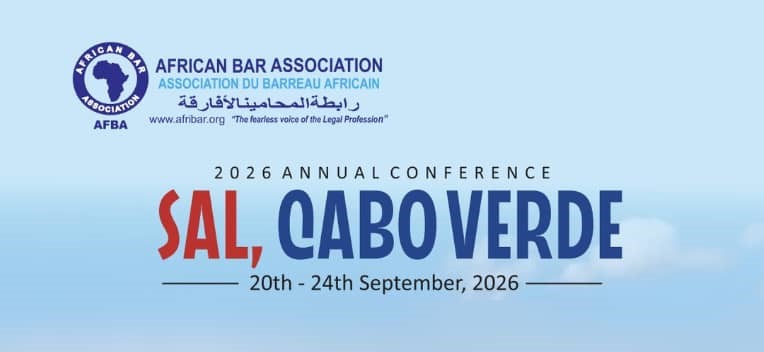
The African Bar Association (AfBA) has concluded its 2026 Annual Conference, held from 20 to 24 September 2026 at the Oasis Atlantico Hotel Belorizonte, Sal, with a communique setting out the Association’s positions on some of the most pressing legal and human rights questions facing the continent.
The conference, themed “Resilient Africa’s Roadmap for Sustainable Development: Strengthening and Addressing Issues of Military, Security and Economic Stability,” brought together lawyers, government officials, military officers and representatives of civil society and international bodies from across Africa and beyond. Participants came from Angola, Burundi, Cabo Verde, Cameroon, Canada, Côte d’Ivoire, Ghana, Guinea-Bissau, Kenya, Liberia, the Netherlands, Nigeria, Sierra Leone, the United States, Uganda and Zambia, among others. All members of the AfBA Governing and Executive Councils were present.
The conference was formally opened on Monday, 21 September 2026, by the Acting President of the Republic of Cabo Verde, Her Excellency Mrs Janira Hopffer Almada.
Also present were Cabo Verde’s Minister of Justice and Parliamentary Affairs, Dr Clóvis Isildo Silva; Justice Zaida Lima, representing the Supreme Court of Cabo Verde; and the Mayor of Sal, Julio Lopes. Nigeria’s Attorney-General of the Federation and Minister of Justice, Prince Lateef Fagbemi, SAN, attended, alongside Uganda’s Deputy Attorney General, Hon. Kafuuzi Jackson Karugaba, and representatives of the Ministers of Justice and Human Rights of Guinea-Bissau and National Defence of Angola.
Military delegations from Burundi, Côte d’Ivoire, the Gambia, Guinea-Bissau, Nigeria and Zambia also attended. Other leaders at the ceremony included the President of the Ghana Bar Association, Mrs Efua Ghartey; the President of the Liberian National Bar Association, Counsellor Juah Lawson; the Second Vice-President of the Nigerian Bar Association, Mr Egya Nuhu John; the Secretary-General of the Cameroon Bar Association, Mr Serges Martin Zangue; and the former President of the ICC Bar Association, Chief Charles Taku.
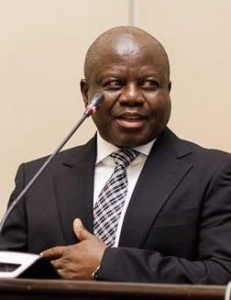
Speeches were delivered by the AfBA President, High Chief Ibrahim Eddy Mark, and the President of the Cabo Verde Bar Association, Dr Julio Martins Jnr, among other dignitaries.
The keynote address was delivered by Prof. Ibrahim Agboola Gambari, CFR, OCORT, a twice United Nations Under-Secretary-General and Special Adviser, and currently a member of the African Union’s High-Level Panel for the Review of the African Union Peace and Security Framework. He argued that Africa’s sustainable development depends on restoring constitutional governance, improving security, strengthening the rule of law and using continental economic integration to build resilience.
Delegates took part in fifteen breakout sessions covering women as catalysts for security reform and development, human rights, aviation, access to justice, security, the Great Lakes Region, taxation, capital markets, artificial intelligence, infrastructure, intellectual property, data privacy, reparations and the rule of law.
The Association also presented Medals of Merit in Leadership to Hon. Dele Kevin Oye, Mr Serges Martin Zangue and Mrs Ligia Arcangela Lubrino Dias Fonseca, in recognition of their service to Africa and their promotion of the rule of law.
In the communique, signed by President High Chief Ibrahim Eddy Mark and Secretary-General Dr Prudence Acirokop, the Association stated that, as the continental professional body of lawyers, it has a moral and professional duty to defend the rule of law, judicial independence, the integrity of international justice mechanisms, the protection of civilians and the fundamental rights of all persons in Africa.
Its main resolutions include:
Darfur. The AfBA called on the UN Security Council and the African Union to provide urgent protection for civilians, urged African states to cooperate fully with the International Criminal Court (ICC), and encouraged victims to pursue legal proceedings under the African Charter on Human and Peoples’ Rights and other instruments.
Reparations. The Association endorsed the UN General Assembly resolution of 25 March 2026 declaring the enslavement of Africans the gravest crime against humanity, and the African Union’s 19-point reparations plan adopted at the 2026 Accra conference. It affirmed that reparatory justice is a legal obligation and called for the return of looted cultural property, stressing that affected communities must take part in any restitution process.
Eastern DRC. The AfBA condemned the offensive by the M23/AFC armed group and the involvement of Rwandan troops, condemned serious violations and the illegal exploitation of Congolese minerals, and urged all parties to engage in the Luanda and Nairobi processes and the African Union-led peace initiative. It also welcomed the DRC’s case against Rwanda at the International Court of Justice and expressed concern about the planned withdrawal of MONUSCO.
International justice. The Association condemned sanctions against ICC judges and prosecutors, expressed concern over the politicisation of the disciplinary process that led to the removal of ICC Prosecutor Karim Khan, and resolved to monitor the election of new ICC judges and the appointment of a new Prosecutor in December 2026.
Malabo Protocol. The AfBA urged all African Union member states to ratify and domesticate the Protocol, noting that Angola is the first to do so and that fourteen more ratifications are required for it to enter into force. It also acknowledged concerns over the immunity provision for serving heads of state and called for constructive dialogue.
Southern Cameroons. The Association condemned violence in the North-West and South-West regions, called for internationally mandated mediation, a transitional justice mechanism and unimpeded humanitarian access.
Xenophobia and migration. It condemned xenophobic violence against migrants, including recent attacks in South Africa, abuse of migrants in Tunisia and attacks targeting Burundians in Nairobi, and called for fair, rights-based immigration policies.
Sahel and West Africa. The AfBA condemned terrorist attacks by JNIM and ISSP, supported regional counter-terrorism efforts, and called for counter-terrorism to comply with international human rights and humanitarian law.
Victoire Ingabire. The Association demanded the immediate and unconditional release of Ms Victoire Ingabire Umuhoza, citing Opinion No. 3/2026 of the UN Working Group on Arbitrary Detention. It mandated the AfBA President and the President of the Cabo Verde Bar Association to ask the Acting President of Cabo Verde to engage the Rwandan government on her situation, and resolved to monitor her trial.
ICTR/IRMCT detainees. The AfBA opposed the transfer of persons detained, acquitted or released by the ICTR/IRMCT, and of the tribunal archives, to Rwanda, and supported keeping existing detention arrangements in Benin and Senegal.
Aviation. Recalling its 2025 Accra resolutions, the Association committed to setting up a working group to follow up on treaties and agreements easing air travel and the free movement of persons in Africa.
The communique thanked the Government and people of Cabo Verde, the Ministry of Justice and Parliamentary Affairs, the Constitutional Court and the Supreme Court, the Cabo Verde Bar Association, the armed forces and security agencies, the sponsors, resource persons, participants and members of the conference’s steering and organising committees.
The conference closed on Thursday, 24 September 2026. The communique was dated at Sal on the same day.