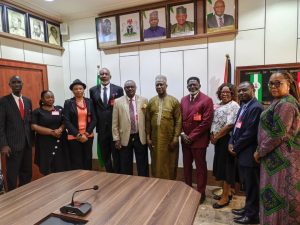

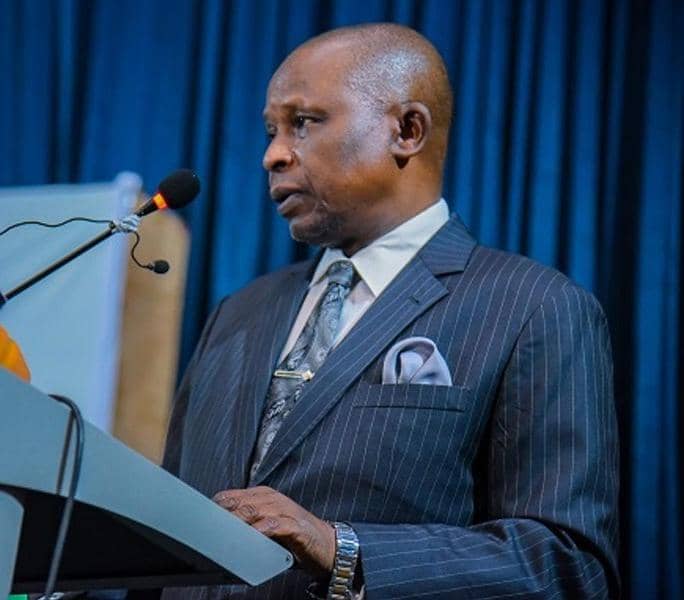
The Attorney-General of the Federation and Minister of Justice of the Federal Republic of Nigeria, Prince Lateef Olasunkanmi Fagbemi, SAN, has delivered a wide-ranging goodwill message to the 2026 Annual Conference of the African Bar Association in Sal, Republic of Cabo Verde, calling on Africa’s legal community to take the lead in confronting the continent’s most urgent challenges — from chronic insecurity and democratic fragility to the internal fractures of xenophobia, tribal hostility and intra-African discrimination.
Fagbemi’s message, delivered to an assembly of lawyers, judges, attorneys-general, policymakers and justice-sector leaders drawn from across the continent and the diaspora, combined a continental advocacy agenda with a candid disclosure of Nigeria’s own domestic justice sector reforms — positioning Nigeria’s legal transformation as a model for broader African emulation.
Opening his message with a commendation of the African Bar Association’s leadership and institutional vision, Fagbemi said the AfBA has served as a vital catalyst for institutional integrity and continental unity — uniting legal minds in the shared pursuit of a more secure, just and resilient Africa.
He described the conference theme — “Resilient Africa’s Roadmap for Sustainable Development: Strengthening and Addressing Issues of Military, Security and Economic Stability” — as both timely and compelling, speaking directly to the most pressing challenges confronting the continent and underscoring the indispensable role that lawyers, judges, policymakers and justice-sector stakeholders must play in shaping Africa’s response.
“Africa’s quest for sustainable development cannot be separated from the existence of strong institutions, respect for the rule of law, access to justice, protection of human rights, and accountable governance,” he said. “The legal profession therefore has a particularly important responsibility to provide the intellectual, institutional, and ethical foundations upon which resilient African societies can be built.”
Fagbemi’s most direct challenge was to the professional identity of every lawyer in the room.
“As lawyers, we are not merely practitioners of law,” he told the conference. “We are custodians of justice, defenders of constitutionalism, and important participants in the development of our societies.”
At a time when the continent continues to confront security threats, democratic transitions, economic pressures, technological disruption and emerging transnational crimes, he said the legal profession must remain at the forefront of finding innovative, lawful and sustainable solutions — not as observers of Africa’s transformation but as its architects.
Fagbemi made an urgent case for deeper cooperation among African legal practitioners and institutions, arguing that the challenges confronting the continent cannot be addressed by any single nation acting alone.
He called for the strengthening of mutual legal assistance frameworks, cross-border cooperation mechanisms, asset recovery processes, the fight against corruption and organised crime, and the harmonisation of digital and cybercrime legislation across the continent.
“Our shared challenges transcend national boundaries and require collective responses,” he said. “Strengthening these frameworks will contribute significantly to a safer and more prosperous Africa.”
In what many delegates described as the most striking passage of his address, Fagbemi turned to an issue that divides African nations even as they attempt to integrate — and named it without diplomatic evasion.
The recurring waves of xenophobic attacks against fellow Africans, racial discrimination and tribal intolerance across various parts of the continent represent, he argued, a direct threat to the very sustainable development that the conference had gathered to advance.
“Sustainable development cannot take root in an atmosphere of intolerance or intra-African hostility,” he said. “As legal practitioners, we must champion legal frameworks and human rights protections that safeguard migrants, refugees, and minorities, ensuring that every African can live, work, and thrive anywhere on the continent free from fear, discrimination, or vigilante violence.”
He was unambiguous about what African resilience actually requires: “True African resilience requires an unyielding commitment to unity, brotherhood, and equal protection under the law.”
The message carried particular resonance in a conference room drawn from across a continent where anti-immigrant sentiment — including violence specifically targeting Nigerians, Zimbabweans and other African nationals in various host countries — has repeatedly undermined the aspirations of continental integration.
Fagbemi used the Sal platform to provide the most comprehensive public account yet of the justice sector reforms currently being pursued by the Federal Government of Nigeria — reforms he offered as evidence that security, stability and human rights protection can and must advance together.
Ending chronic trial delays. Nigeria is advancing key legislative amendments to its criminal justice framework, including mandatory pre-trial case management, the full integration of digitised court proceedings, and critically, legislative measures to prevent trials from starting de novo when judges are elevated or transferred. This last reform addresses one of the most persistently damaging features of Nigeria’s criminal justice system — the effective nullification of years of proceedings when a presiding judge moves to a higher bench.
National standards and restorative justice. Nigeria has introduced National Minimum Standards on Criminal Justice alongside a nationwide Harmonised Restorative Justice Framework. By establishing operational benchmarks across all jurisdictions, the government is working to prevent criminals from exploiting jurisdictional gaps through forum shopping, while incorporating restorative justice mechanisms, victim compensation provisions and witness support funds into the country’s procedural regime.
“These statutory reforms demonstrate that security, stability, and human rights protection must move in tandem,” Fagbemi told the conference.
Fagbemi closed by urging every delegate in Sal to treat the conference not as an end in itself but as the beginning of professional relationships and institutional partnerships capable of delivering real change on the ground.
“I encourage all participants to use this gathering to exchange ideas, deepen professional relationships, and forge partnerships that will endure beyond the Conference,” he said. “Let us continue to promote a legal profession that is independent, ethical, innovative, and responsive to the needs of our people.”
He reaffirmed Nigeria’s long-standing commitment to the African legal community and to supporting initiatives that strengthen the legal profession across the continent.
His final words to the conference were both a wish and a charge: “May the deliberations in Sal produce concrete recommendations and enduring partnerships that will contribute to the realisation of a resilient, peaceful, and prosperous Africa.”
The 2026 Annual Conference of the African Bar Association holds from September 20 to 24, 2026, on Sal Island in the Republic of Cabo Verde. The conference brings together lawyers, judges, attorneys-general, justices of superior courts, representatives of the African Union and regional economic communities, members of the diplomatic corps and legal scholars from across Africa and the diaspora.
This year’s keynote address was delivered by Professor Ibrahim Agboola Gambari, CFR, Founder and Chairman of the Savannah Centre for Diplomacy, Democracy and Development, Abuja, Nigeria, and former United Nations Under-Secretary-General and Chief of Staff.
The conference was formally opened by the Acting President of the Republic of Cabo Verde, Mrs. Janira Hopffer Almada.