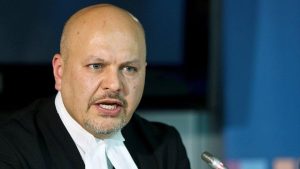
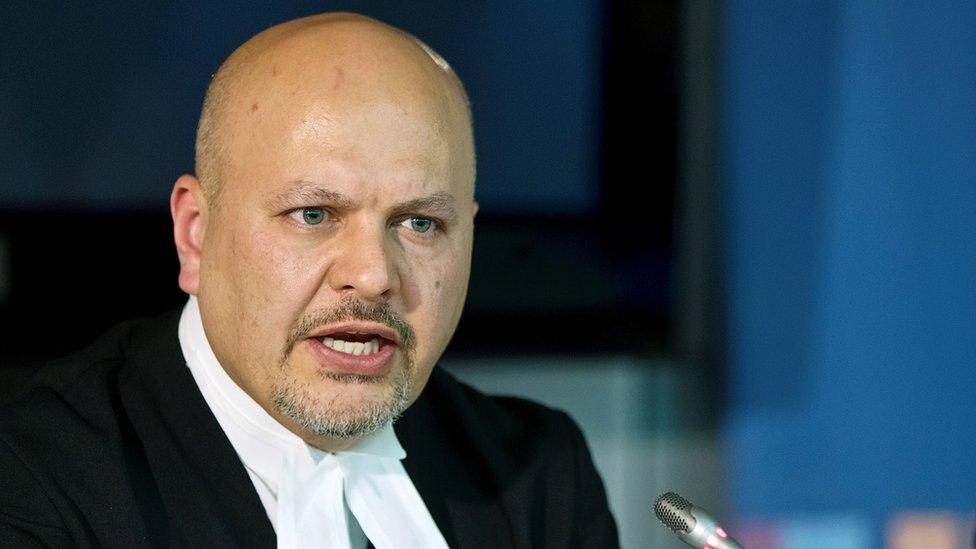
Two prominent international legal organisations, the International Association of Democratic Lawyers and the African Bar Association, have separately issued statements firmly opposing the removal of International Criminal Court Prosecutor Karim A. A. Khan KC, calling on the Assembly of States Parties to accept the unanimous findings of an independent judges’ panel that cleared him of allegations of sexual misconduct and close the matter entirely.
The statements come ahead of a Special Session of the Assembly of States Parties scheduled for 24 July 2026 at United Nations Headquarters in New York, convened for the purpose of conducting disciplinary proceedings against Prosecutor Khan, proceedings that both organisations argue are politically motivated, legally unjustified, and fundamentally corrosive of the principle of judicial independence on which the International Criminal Court’s credibility rests.
The IADL’s Position
The International Association of Democratic Lawyers, an international organisation of jurists founded in 1946 and granted Consultative II status by the United Nations Economic and Social Council in 1969, issued its statement on 12 July 2026, describing the convening of the Special Session as a deeply troubling disregard for the outcome of the very judicial process the Assembly of States Parties had itself established to resolve the matter.
Following the emergence of the allegations, almost two years of investigations were conducted by both the ICC’s Internal Oversight Mechanism and the United Nations Office of Internal Oversight Services. Those investigations culminated in a judicial determination by an independent ad hoc Judges’ Panel composed of three judges. In March 2026, that panel unanimously concluded, applying the standard of proof beyond a reasonable doubt, that the facts presented in the UN investigation did not establish misconduct or breach of duty on the part of the Prosecutor under the applicable legal framework.
The IADL argued that the Judges’ Panel’s unanimous decision should have marked the definitive end of the matter. Instead, in early June 2026, the Bureau of the Assembly of States Parties, a political body of States Parties, voted in a split decision to suspend Prosecutor Khan pending final approval by the full Assembly, in direct disregard of the independent judicial body’s legal conclusions.
“The IADL fails to understand why a majority of the ASP’s Bureau rejected the legal conclusions of an independent judicial body which it had established,” the organisation stated. “The Bureau’s disregard for the Judges’ decision undermines the fundamental principle of independence of the judiciary, which is found in the Rome Statute Article 40 and in other human rights instruments and UN Resolutions. By doing so, it also erodes the integrity and legitimacy of the ICC.”
The Political Motivation Argument
The IADL did not stop at procedural objection. It went further, making an explicit argument that the Bureau’s decision to proceed against Prosecutor Khan despite the Judges’ Panel’s findings fortifies the perception that the removal effort is politically motivated, serving the interests of two states that are not parties to the Rome Statute: the United States and Israel.
The organisation noted that both states voted against the creation of the ICC and have for two decades actively worked to undermine the principles of fairness and the equal application of the rule of law. On the United States, the IADL noted that it has unsigned the Rome Statute, passed legislation to protect its military from the ICC’s jurisdiction, and imposed sanctions on ICC judges and prosecutors whose decisions hold the US accountable for crimes under international law, specifically in the Afghanistan and Palestine situations.
On Israel, the IADL noted a documented pattern of interference with and attempts to obstruct the ICC’s investigations into allegations of Israeli crimes in Palestine dating to 2015, including reported threats and surveillance by Israel’s Mossad against former Chief Prosecutor Fatou Bensouda, who opened a preliminary examination into Israel’s alleged war crimes in Palestine.
The IADL further noted that in November 2025, a year after the ICC had issued arrest warrants for Netanyahu and Gallant, Israel filed a formal request to disqualify Prosecutor Khan on grounds of alleged lack of impartiality under Rome Statute Article 42(7), arguing that the arrest warrants had been motivated by his desire to deflect attention from the sexual misconduct allegations. The IADL described this as part of a consistent pattern of Israel using legal processes for its own political ends to shield its government officials from prosecution, notwithstanding the ICC’s rejection of its previous jurisdictional and admissibility challenges.
Against that backdrop, the IADL said the timing of the sexual misconduct allegations — surfacing at the precise moment the Office of the Prosecutor was preparing arrest warrant applications for Israeli officials — raises the question of whether the two events were mere coincidence or another strategy to immunise Israel’s leadership from prosecution.
Prosecutor Khan has consistently denied all allegations against him.
The IADL called on the Assembly of States Parties to vote to accept the Judges’ Panel’s unanimous decision and close the matter, declaring its firm opposition to the Prosecutor’s removal.
The African Bar Association Joins the Opposition
In a statement dated 15 July 2026 and signed by its President, High Chief Ibrahim Eddy Mark, the African Bar Association expressed firm support for the IADL’s position and added its own institutional voice to the call for the Assembly of States Parties to respect the findings of the independent judicial panel.
AFBA noted that the independent panel of three distinguished judges, constituted by the Bureau of the Assembly of States Parties, had reviewed the relevant material and unanimously concluded that the evidence did not establish misconduct or breach of duty on the part of the Prosecutor under the applicable legal framework.
“Disregarding the conclusions of a duly constituted and impartial judicial body risks undermining confidence in the integrity, independence, and credibility of the Court’s institutional processes,” the AFBA stated.
The Association reaffirmed that the independence of the Office of the Prosecutor is fundamental to the effective administration of international criminal justice and must be protected from political influence or external pressure, and that decisions affecting the tenure of the Prosecutor must be based solely on established legal standards, credible evidence, and fair procedures.
AFBA joined the IADL in urging the Assembly of States Parties to reject calls for the Prosecutor’s removal that are inconsistent with the findings of the independent judicial panel and to uphold the principles of fairness, judicial independence, and the rule of law.
The Association further endorsed the IADL’s position in full and urged the Assembly of States Parties, as it meets on 24 July 2026, to accept and act upon the findings of the three-member Judicial Panel Report.
Background
Karim A. A. Khan, KC has served as Prosecutor of the International Criminal Court since 2021. The sexual misconduct allegations against him emerged in May 2024 at the same time as the Office of the Prosecutor was preparing what would become one of the most consequential and politically charged applications in the Court’s history — the application for arrest warrants against Israeli Prime Minister Benjamin Netanyahu and former Defence Minister Yoav Gallant in connection with alleged crimes committed in Gaza.
The Court issued those arrest warrants in November 2024. The warrants have been contested by Israel, the United States, and several other governments, generating sustained political pressure on the ICC and its leadership. The Special Session of the Assembly of States Parties scheduled for 24 July 2026 will be open only to States Parties to the Rome Statute, a grouping that excludes the United States and Israel, both of which are not Rome Statute parties but both of which have nonetheless been deeply involved in the political dynamics surrounding the ICC’s Palestine investigations.