
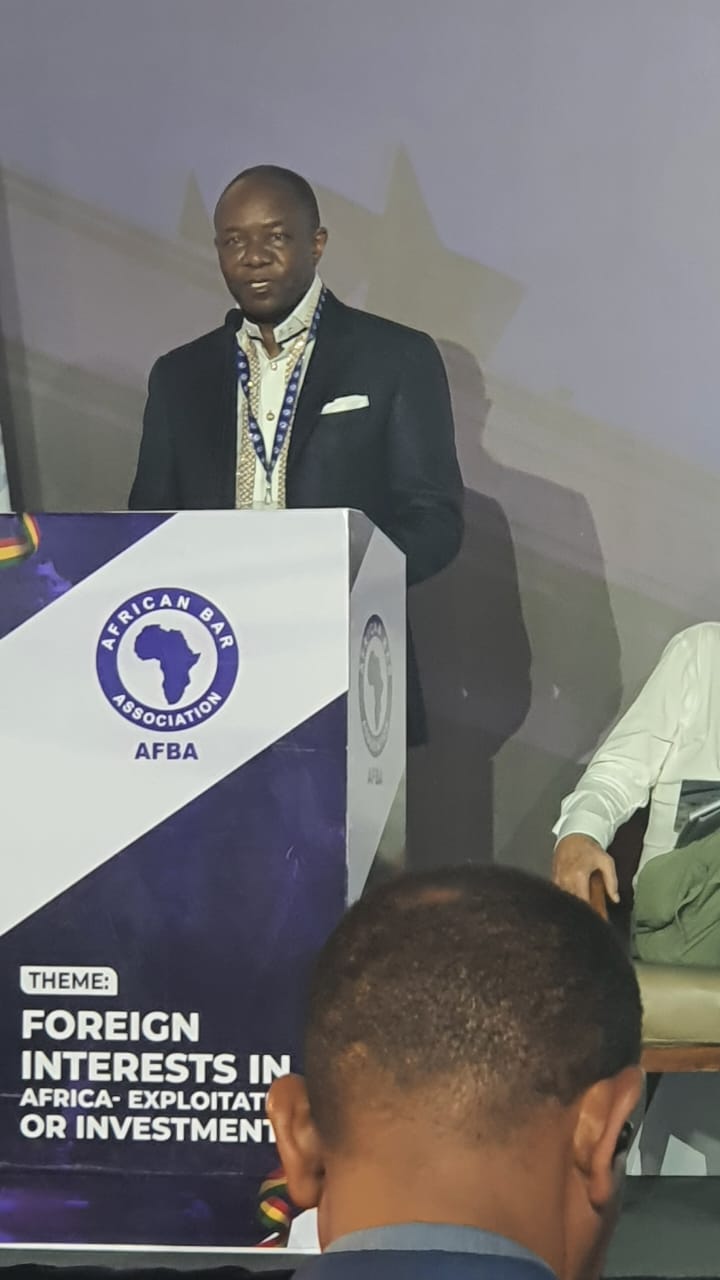
Delivering his speech at the 2025 AfBA Annual Conference in Accra, former Petroleum Minister and energy expert, H.E. Prof. Ibe Kachikwu, has challenged African nations to rethink their relationship with foreign investors, insisting that without internal financing and coordinated policies, Africa risks another cycle of economic exploitation disguised as investment.
Speaking on the topic “Foreign Interests in Africa: Investment or Exploitation?”, Kachikwu noted that about 60 percent of major African investments remain offshore, while only 40 percent are on the continent. He cited recent projects such as the UAE’s $35 billion investment drive and the $5.6 billion East African Crude Oil Pipeline between Uganda and Tanzania as examples of foreign capital shaping African economies.
He questioned the long-term impact of such investments, pointing out that while some hydrocarbon-linked countries like Niger, Senegal, and Côte d’Ivoire are recording growth rates above 6 percent, the benefits rarely translate to lasting domestic wealth.
According to him, Africa’s biggest challenge remains financial dependence. “We have the resources but not the financial capacity to develop them,” he said. “Countries like Saudi Arabia and the UAE created wealth funds to reinvest their oil earnings. Africa failed to do that and now remains tied to dangerous Western financial strings.”
Kachikwu stressed that control naturally follows capital. “If someone funds a project 100 percent, they will control it 100 percent,” he said. “Africa must begin to put its own money where its mouth is.”
He commended Nigeria’s Local Content Law as a rare success story that improved indigenous participation in oil and gas. “Today, up to 70 percent of technical skills in the sector are local. That didn’t happen by chance—it was driven by deliberate policy,” he said.
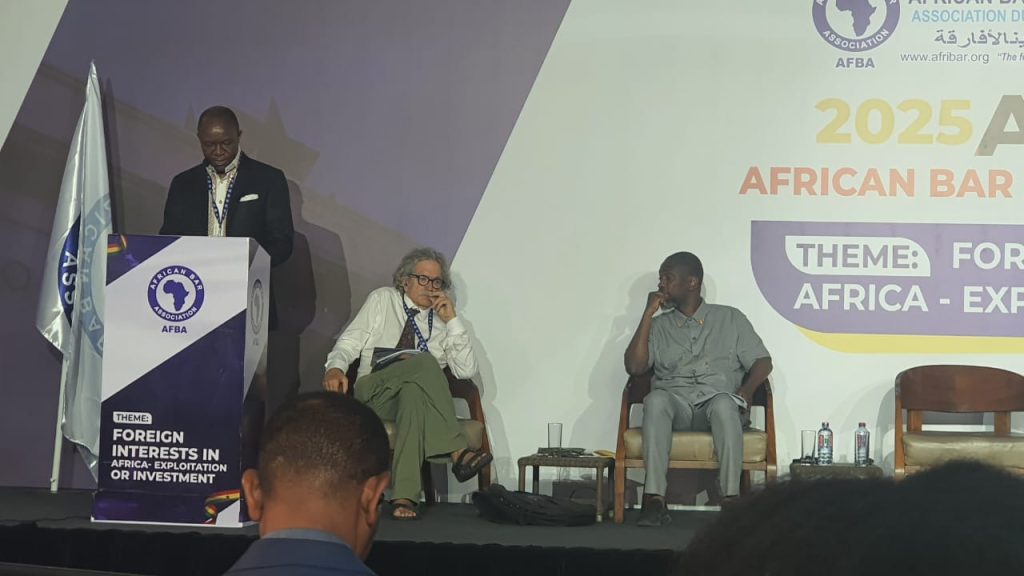
Kachikwu urged African governments to attract the right kind of investment, aligned with each country’s comparative advantage. “Not every nation should chase the same type of investment. Development must match local strengths,” he advised.
He called for stronger tax enforcement to prevent domestic investors from replicating the same exploitative behaviour often blamed on foreign companies. “If your citizens evade taxes after taking over local assets, then you’ve only replaced foreign exploitation with internal corruption,” he warned.
On financing, Kachikwu proposed that Africa create joint wealth funds similar to the Arab Sovereign Funds to back its industrial and energy ambitions. “Africa must pool resources together—individually we are weak, collectively we can finance our future,” he said.
He criticized the tendency of African leaders to negotiate separately with powerful countries. “It’s absurd to see all our presidents queuing in China for investment meetings. That’s not negotiation—it’s submission,” he remarked. “If we set common investment benchmarks across Africa, no investor can play one country against another.”
Kachikwu concluded by urging Africa to build and dominate its own market. “With 1.2 billion people and trillions in untapped resources, Africa is the world’s last economic frontier. If we don’t act together, others will own our market again,” he warned.